Home/Ingredients/Quercetin (with Bromelain)
ANTIOXIDANTS

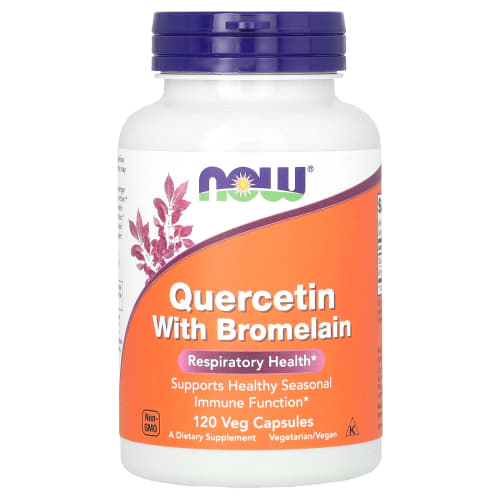
Quercetin (with Bromelain)

Immune · allergies · circulation

MODERATE EVIDENCEVEGANREAD THE RESEARCH
Written to our editorial standards · reviewed against published research· Updated 2 Jun 2026
Last reviewed: May 30, 2026
QUICK ANSWER

Quercetin: Immune · allergies · circulation. Plant flavonoid that supports a balanced histamine response, capillary integrity, and antiviral immune activity. Standard dose 500 mg, taken in the morning, about $18/month. Evidence rating: moderate evidence.

What is Quercetin?

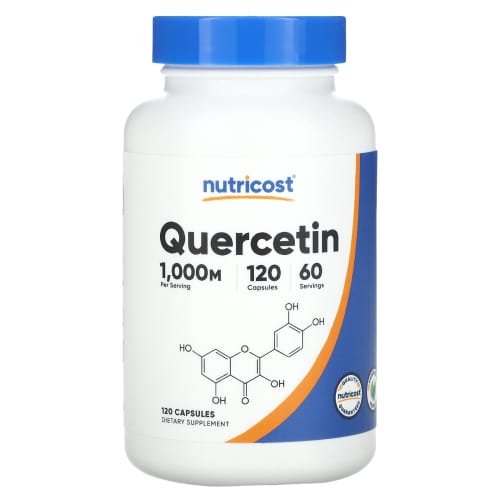
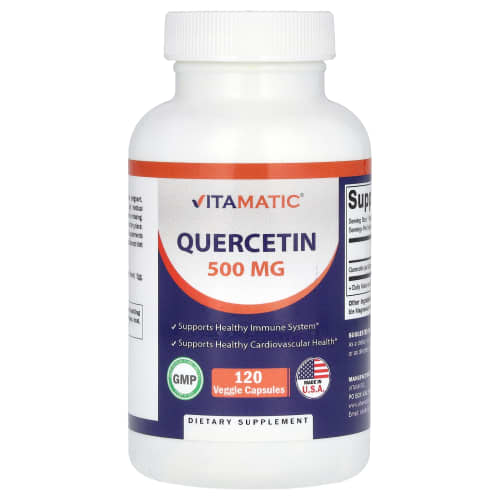
Quercetin is a flavonoid pigment abundant in onions, apples, capers, and red wine. As one of the most-studied plant polyphenols, it has been investigated for its antioxidant, anti-inflammatory, and immune-modulating effects. Quercetin stabilizes mast cells, the immune cells that release histamine, which is why many practitioners use it to support a balanced response during allergy season. It has also gained attention for its zinc-ionophore activity, helping zinc enter cells where it supports antiviral defenses. Bromelain (an enzyme from pineapple) is often paired with quercetin to enhance absorption. Typical doses are 500-1,000 mg daily.

WHY IT MATTERS

Plant flavonoid that supports a balanced histamine response, capillary integrity, and antiviral immune activity.

Natural food sources

Where possible, get Quercetin from whole foods first. Common dietary sources include:

OnionsApplesCapersBerriesKale

Where to buy

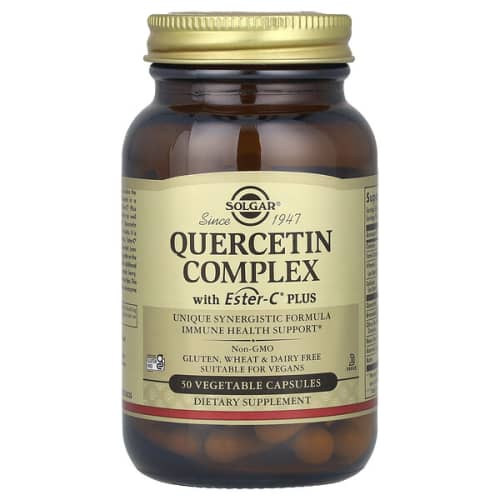
Solgar Quercetin Complex with Bromelain
RECOMMENDED
Solgar, Quercetin
500 mg · Morning · ~$18/month

suppdoc.io is an affiliate. Links may earn us a commission at no extra cost to you.

Best for your goal

Interactions

Other antioxidants

Curcumin (with BioPerine)
Inflammation · joint · recovery
CoQ10 (Ubiquinol)
Cellular energy · heart
Alpha-Lipoic Acid (ALA)
Antioxidant · blood sugar · nerve health
Resveratrol (Trans)
Longevity · circulation · antioxidant

Common questions

What is Quercetin?
Quercetin is a flavonoid pigment abundant in onions, apples, capers, and red wine. As one of the most-studied plant polyphenols, it has been investigated for its antioxidant, anti-inflammatory, and immune-modulating effects. Quercetin stabilizes mast cells, the immune cells that release histamine, which is why many practitioners use it to support a balanced response during allergy season. It has also gained attention for its zinc-ionophore activity, helping zinc enter cells where it supports antiviral defenses. Bromelain (an enzyme from pineapple) is often paired with quercetin to enhance absorption. Typical doses are 500-1,000 mg daily.
What is Quercetin used for?
Immune · allergies · circulation. Plant flavonoid that supports a balanced histamine response, capillary integrity, and antiviral immune activity.
What is the standard dose of Quercetin?
500 mg, typically taken in the morning. Approximate cost is $18 per month.
How strong is the evidence for Quercetin?
Moderate evidence for its primary uses. See the full study list on the research page.

Not sure if Quercetin is right for you?

Take our quiz. We'll compose a personalised stack that fits your goals, body, and budget, in minutes.

Take the quiz →