Home/Ingredients/Inulin (Prebiotic Fiber)
GUT & DIGESTIVE

Inulin (Prebiotic Fiber)

Prebiotic · gut microbiome · regularity

STRONG EVIDENCEVEGANREAD THE RESEARCH
Written to our editorial standards · reviewed against published research· Updated 2 Jun 2026
Last reviewed: May 30, 2026
QUICK ANSWER

Inulin: Prebiotic · gut microbiome · regularity. Selective prebiotic that feeds beneficial Bifidobacterium and Lactobacillus. Supports microbiome diversity and short-chain fatty acid production. Standard dose 5 g, taken in the morning, about $14/month. Evidence rating: strong evidence.

What is Inulin?

Inulin is a soluble fiber naturally found in chicory root, Jerusalem artichokes, garlic, onions, and asparagus. Because human enzymes cannot break it down, it passes intact to the large intestine where it is selectively fermented by beneficial bacteria, particularly Bifidobacterium and Lactobacillus species. This fermentation produces short-chain fatty acids like butyrate, which nourish colon cells and modulate immune function. Research supports inulin for microbiome diversity, regularity, calcium absorption, and metabolic markers. Start with 2-5 g per day to allow gut adaptation; some people experience initial gas or bloating that resolves within 1-2 weeks. Can be added to smoothies or coffee.

WHY IT MATTERS

Selective prebiotic that feeds beneficial Bifidobacterium and Lactobacillus. Supports microbiome diversity and short-chain fatty acid production.

Natural food sources

Where possible, get Inulin from whole foods first. Common dietary sources include:

Chicory rootOnionsGarlicBananasAsparagus

Where to buy

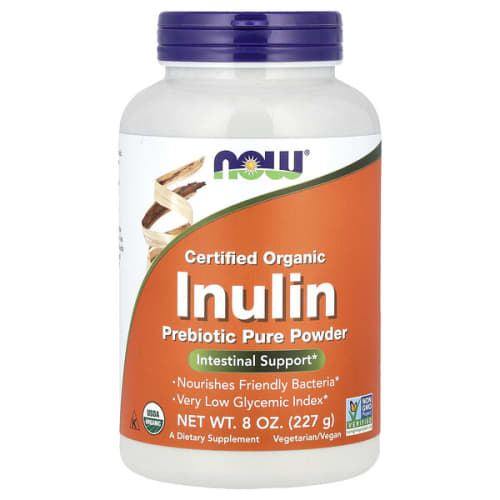
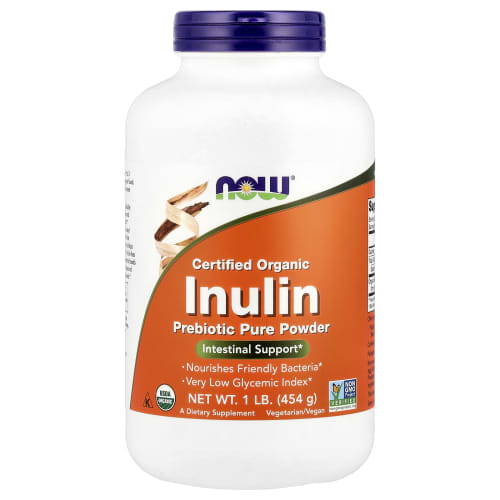
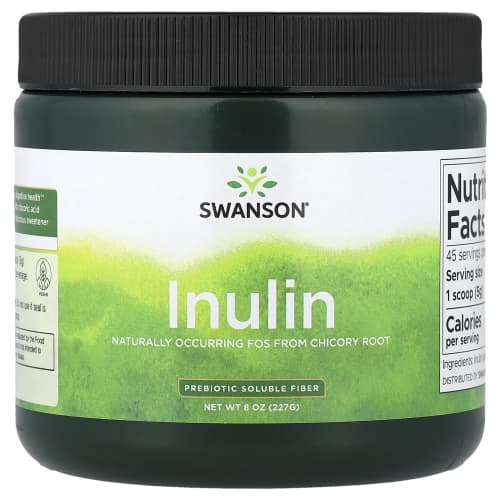
NOW Foods Inulin Prebiotic Pure Powder
RECOMMENDED
NOW Foods, Inulin
5 g · Morning · ~$14/month

suppdoc.io is an affiliate. Links may earn us a commission at no extra cost to you.

Best for your goal

Interactions

Other gut & digestive

Multi-Strain Probiotic
Gut · immunity · mood
Digestive Enzymes (Broad-Spectrum)
Digestion · bloating · nutrient uptake
Psyllium Husk Powder
Fiber · cholesterol · regularity
Ginger Root Extract
Digestion · nausea · inflammation

Common questions

What is Inulin?
Inulin is a soluble fiber naturally found in chicory root, Jerusalem artichokes, garlic, onions, and asparagus. Because human enzymes cannot break it down, it passes intact to the large intestine where it is selectively fermented by beneficial bacteria, particularly Bifidobacterium and Lactobacillus species. This fermentation produces short-chain fatty acids like butyrate, which nourish colon cells and modulate immune function. Research supports inulin for microbiome diversity, regularity, calcium absorption, and metabolic markers. Start with 2-5 g per day to allow gut adaptation; some people experience initial gas or bloating that resolves within 1-2 weeks. Can be added to smoothies or coffee.
What is Inulin used for?
Prebiotic · gut microbiome · regularity. Selective prebiotic that feeds beneficial Bifidobacterium and Lactobacillus. Supports microbiome diversity and short-chain fatty acid production.
What is the standard dose of Inulin?
5 g, typically taken in the morning. Approximate cost is $14 per month.
How strong is the evidence for Inulin?
Strong evidence for its primary uses. See the full study list on the research page.

Not sure if Inulin is right for you?

Take our quiz. We'll compose a personalised stack that fits your goals, body, and budget, in minutes.

Take the quiz →