Home/Ingredients/TMG (Trimethylglycine / Betaine)
AMINO ACIDS

TMG (Trimethylglycine / Betaine)

Methyl donor · homocysteine · NAD+ co-factor

STRONG EVIDENCEVEGANREAD THE RESEARCH
Written to our editorial standards · reviewed against published research· Updated 2 Jun 2026
Last reviewed: May 30, 2026
QUICK ANSWER

TMG: Methyl donor · homocysteine · NAD+ co-factor. A methyl donor that lowers homocysteine and replenishes methyl groups consumed by NAD+ precursors like NMN and NR. Standard dose 1000 mg, taken in the morning, about $14/month. Evidence rating: strong evidence.

What is TMG?

Trimethylglycine (TMG), also known as betaine anhydrous, is a methyl donor that supports the conversion of homocysteine to methionine, an important pathway for cardiovascular health and DNA methylation. TMG is particularly relevant for anyone taking NAD+ precursors (NMN, NR), since methylating excess nicotinamide consumes methyl groups; TMG replaces them. Clinical trials at 1.5-4 g/day show meaningful reductions in elevated homocysteine. TMG is also studied for athletic performance, with research suggesting small improvements in power output and body composition. Standard dose is 500-2000 mg per day.

WHY IT MATTERS

A methyl donor that lowers homocysteine and replenishes methyl groups consumed by NAD+ precursors like NMN and NR.

Natural food sources

Where possible, get TMG from whole foods first. Common dietary sources include:

BeetsSpinachWhole grainsQuinoaWheat bran

Where to buy

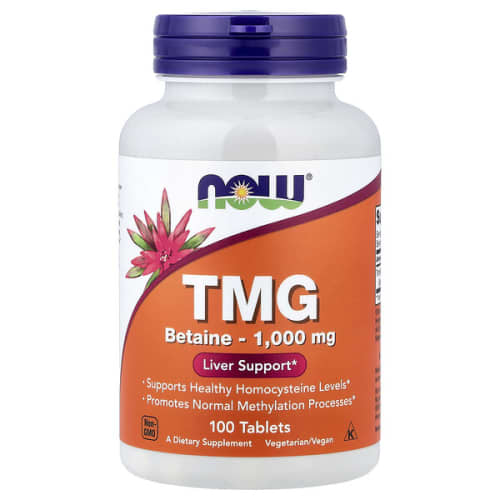
NOW Foods TMG 1000mg
RECOMMENDED
NOW Foods, TMG
1000 mg · Morning · ~$14/month

suppdoc.io is an affiliate. Links may earn us a commission at no extra cost to you.

Stacks that include TMG

The Longevity Blueprint
The frontier protocol for slower biological aging.

Best for your goal

Interactions

Related biomarkers

Other amino acids

L-Theanine (Suntheanine)
Calm focus · stress
Glycine
Sleep depth · core body temperature
N-Acetyl Cysteine (NAC)
Liver · antioxidant · respiratory
Taurine
Heart · sleep · cellular hydration

Common questions

What is TMG?
Trimethylglycine (TMG), also known as betaine anhydrous, is a methyl donor that supports the conversion of homocysteine to methionine, an important pathway for cardiovascular health and DNA methylation. TMG is particularly relevant for anyone taking NAD+ precursors (NMN, NR), since methylating excess nicotinamide consumes methyl groups; TMG replaces them. Clinical trials at 1.5-4 g/day show meaningful reductions in elevated homocysteine. TMG is also studied for athletic performance, with research suggesting small improvements in power output and body composition. Standard dose is 500-2000 mg per day.
What is TMG used for?
Methyl donor · homocysteine · NAD+ co-factor. A methyl donor that lowers homocysteine and replenishes methyl groups consumed by NAD+ precursors like NMN and NR.
What is the standard dose of TMG?
1000 mg, typically taken in the morning. Approximate cost is $14 per month.
How strong is the evidence for TMG?
Strong evidence for its primary uses. See the full study list on the research page.

Not sure if TMG is right for you?

Take our quiz. We'll compose a personalised stack that fits your goals, body, and budget, in minutes.

Take the quiz →